
Satisfies 1 requirement
Online Double Conversion UPS 1-3kVA 2u Rack Tower with LCD RS232 USB
US$208.50-284.50
1 Piece(MOQ)

I have found results from9000+products and3000+suppliers about3kva ups


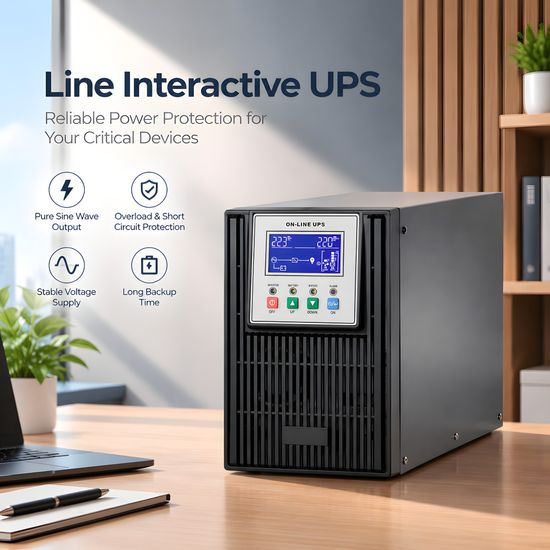


When sourcing a 3Kva UPS, the most critical factor is the Output Power Factor. A UPS with a 0.9 or 1.0 power factor provides more real power (2700W-3000W) compared to older 0.7 models. Additionally, verify the Topology type: Online Double Conversion is essential for sensitive medical or server equipment as it provides zero transfer time, whereas Line-Interactive models are more cost-effective for basic office setups. Ensure the unit supports a Wide Input Voltage Range (typically 110V-300V) to protect internal batteries from frequent discharge in areas with unstable grids.
To ensure safety and legal entry into markets, the UPS must adhere to IEC 62040-1 (General and safety requirements) and IEC 62040-2 (EMC requirements). For the North American market, UL 1778 certification is vital. If the UPS contains lead-acid or lithium batteries, it must comply with RoHS for hazardous substances and have UN38.3 certification for battery transport safety. Always request CE and FCC test reports from the supplier to verify these claims.
Check if the UPS uses Internal Batteries or requires an External Battery Bank (EBM) for extended runtime. For 3Kva units, a standard configuration often involves 6 pieces of 12V/7Ah or 9Ah batteries. Inquire about Hot-swappable battery designs, which allow for maintenance without shutting down the connected load. For future-proofing, prioritize models with Parallel Redundancy (N+X) capabilities and Intelligent Slot support for SNMP cards to enable remote monitoring.
The main risk involves Battery Logistics Regulations. UPS systems are classified as Dangerous Goods (Class 9) due to their batteries. You must ensure the supplier provides a Material Safety Data Sheet (MSDS) and a Non-Dangerous Goods Declaration if applicable. To mitigate physical damage, require Reinforced Plywood Crating or double-walled corrugated boxes with High-Density PE Foam padding, as 3Kva units are heavy (often 25kg+) and prone to impact damage during sea freight.
Focus on Audited Suppliers who have undergone on-site inspections by third parties like SGS or Intertek. Review their Export Experience specifically in the power electronics sector; a supplier with a high Transaction Level in your target region is more likely to understand local voltage and plug standards (e.g., NEMA vs. Schuko). Request a Video Factory Audit to inspect their Burn-in Testing Room, where units should be tested under full load for at least 4-8 hours before packing.
Beyond the unit price, negotiate for Spare Parts Kits (1-2% of order value), including power boards and control PCBs, to handle local repairs quickly. Discuss Warranty Terms—top-tier suppliers offer 2-3 years for electronics and 1 year for batteries. For large volumes, request OEM/ODM customization for the LCD interface and branding, and aim for a 30% deposit / 70% balance after inspection payment structure to ensure quality leverage.