
Satisfies 1 requirement
Wholesale Alloy Miniature Diecast 1: 64 Alloy off Road Model Car
US$0.42-0.50
2,880 Pieces(MOQ)

I have found results from50000+products and10000+suppliers aboutCars diecast models


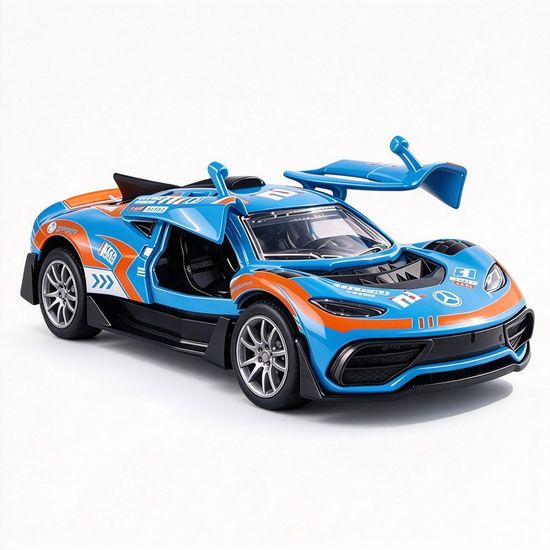


Buyers should prioritize the scale accuracy (commonly 1:18, 1:24, or 1:43) and the material composition, specifically looking for high-grade zinc alloy for the body to ensure weight and durability. Pay close attention to the paint finish quality, ensuring an electrostatic spray painting process is used to avoid orange peel effects or bubbles. For premium collectors, verify functional details such as opening doors/hoods, steerable wheels, and independent suspension systems.
Since diecast models are often classified as toys or collectibles, they must adhere to strict safety regulations. For the US market, ASTM F963 and CPSIA (lead and phthalate limits) are mandatory. For the EU, products must carry the CE Mark and comply with EN71 (Parts 1, 2, and 3). Additionally, if the models represent real car brands, the supplier must possess a valid licensing agreement from the original equipment manufacturer (OEM) to avoid trademark infringement.
Request information on the mold precision; top-tier suppliers use CNC-machined molds with tolerances below 0.05mm. Evaluate the interior detailing, looking for flocked carpets, photo-etched (PE) parts for grilles and wipers, and highly detailed engine bays. A supplier's ability to provide limited edition certificates and branded display packaging significantly enhances the retail value and appeal to serious collectors.
Zinc Alloy (Diecast) is preferred for mass production and durability, offering movable parts and a 'heavy' feel that consumers equate with quality. Resin models are better for low-volume, high-detail runs as they don't require expensive steel molds, allowing for more intricate body lines, though they are typically sealed (no opening parts) and more fragile during shipping.
IP risk is the highest concern in this category. Always ask the supplier for an Authorization Letter from the car brand (e.g., Ferrari, Toyota). If the supplier cannot provide proof of licensing, the goods may be seized and destroyed by Customs. When sourcing via Made-in-China.com, look for Audited Suppliers who have had their business licenses and export qualifications verified by third-party agencies like SGS or TÜV Rheinland.
Diecast models are prone to 'paint rash' from humidity and breakage from vibration. Insist on double-walled corrugated export cartons and custom-fit EPE foam or blister inserts. For sea freight, request desiccant silica gel packs inside each unit box to prevent moisture damage to the metal. For high-value 1:18 models, palletizing the shipment is recommended to minimize manual handling shocks.
For custom molds, expect a high upfront tooling cost (ranging from $5,000 to $20,000). Negotiate a tooling rebate where the supplier refunds a portion of the mold cost once a certain volume (e.g., 5,000 units) is reached. For wholesale of existing models, aim for a tiered pricing structure where a 20-30% discount is applied for Full Container Load (FCL) orders compared to Less than Container Load (LCL).
Utilize Trade Assurance services provided by Made-in-China.com to ensure payment is only released upon proof of shipment. For first-time orders, hire a third-party inspection service (like V-Trust or QIMA) to perform a Pre-Shipment Inspection (PSI). Focus on the AQL (Acceptable Quality Level) 2.5 standard to check for paint defects, missing parts, and packaging integrity before the final balance is paid.