Satisfies 1 requirement
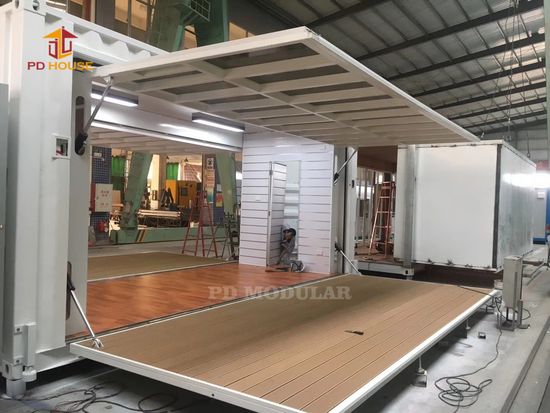
Modern Home Prefabricated Movable Container House/Office
US$8,000.00-9,000.00
1 Piece(MOQ)

I have found results from200000+products and60000+suppliers aboutContainer office


When sourcing container offices, prioritize structural integrity and insulation. Ensure the frame uses galvanized steel with a thickness of at least 2.5mm to 3.0mm to prevent corrosion. For wall panels, Rockwool or Polyurethane (PU) sandwich panels are essential for thermal efficiency and fire resistance. Additionally, verify that the floor loading capacity meets your requirements, typically at least 250kg/m² for standard office use.
Compliance varies by destination. For the US market, ensure the units meet ASTM standards and local building codes regarding electrical wiring (UL listed). For the EU, look for CE marking and compliance with EN 1090-1 for steel structures. If the office will be shipped via standard freight routes, it must have a valid CSC (Container Safety Convention) plate to be stacked and transported as a standard shipping container.
Focus on the roofing system and sealing technology. High-quality suppliers use a four-side drainage system with internal downspouts to prevent water accumulation. Check for EPDM rubber sealing strips on doors and windows. For coastal or high-humidity areas, specify C3 or C4 grade anti-corrosion painting to extend the lifespan of the unit to 15-20 years.
A capable supplier should offer modular scalability, allowing units to be bolted together for larger office complexes. Look for providers who can supply integrated electrical and plumbing systems pre-installed to save on-site labor costs. Professional suppliers on Made-in-China.com often provide CAD and 3D design services to visualize internal layouts, including partitions, HVAC placement, and glass curtain walls.
The biggest risks are shipping damage and non-compliance with local zoning laws. To mitigate this, request third-party pre-shipment inspections (such as SGS or BV) to verify material thickness and weld quality. Ensure the supplier provides a detailed packing list for all small components (bolts, trim, sealant) to avoid project delays due to missing parts during assembly.
Negotiate based on Total Landed Cost rather than just the unit price. For large projects, ask for volume discounts (typically 5-10% for 10+ units). Discuss Flat-Pack (SOC) vs. Fully Assembled shipping; flat-packing can reduce freight costs by up to 75% as four units can often fit into the space of one standard 20ft container.
Always use secure payment terms such as a Letter of Credit (L/C) or payment services provided by Made-in-China.com that offer escrow-like protection. Never pay 100% upfront; a standard industry practice is a 30% deposit and 70% balance payment after receiving the bill of lading and inspection report.
Verify if your local port has the equipment to handle SOC (Shipper Owned Containers). For inland delivery, ensure the site is accessible by a crane truck or heavy-duty forklift. Be aware of Anti-Dumping Duties on steel structures in certain regions; consult with a customs broker to confirm the correct HS Code (typically 940690) to avoid unexpected tariffs.