
Satisfies 1 requirement
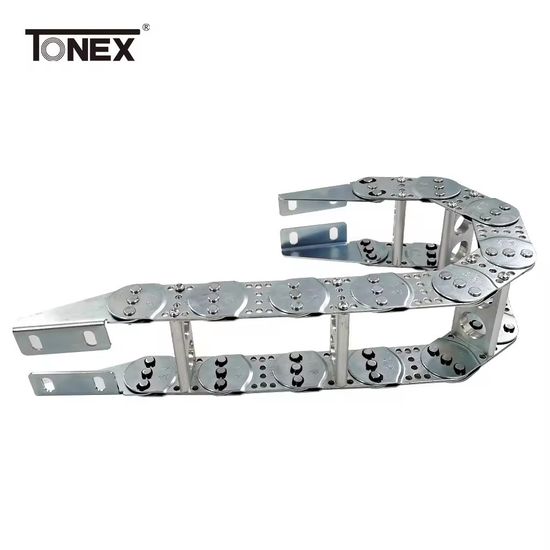
Steel Metallic Cable Drag Chain Conveyor Belt for CNC Machnie
US$10.00-15.00
50 Pieces(MOQ)

I have found results from100000+products and60000+suppliers aboutConveyor belt chain




Buyers must prioritize material grade, such as SUS304 or SUS316 stainless steel for food grade/corrosion resistance, or reinforced carbon steel for heavy-duty industrial use. Pay close attention to the pitch size, breaking load (tensile strength), and working temperature range. For high-speed applications, ensure the chain has precision-ground rollers and heat-treated pins to minimize friction and elongation over time.
Verify that the supplier complies with ISO 606 (International Standard for short-pitch precision roller chains) or ANSI B29.1. For food processing or pharmaceutical industries, ensure the product has FDA or EU food-contact compliance certifications. Requesting a Material Test Report (MTR) is essential to confirm the chemical composition of the steel used.
Evaluate the Total Cost of Ownership (TCO) by looking beyond the initial price. A chain with self-lubricating technology or wear-resistant coatings may have a higher upfront cost but significantly reduces maintenance downtime and replacement frequency. Always compare the wear life expectancy provided by the manufacturer against your specific load and cycle requirements.
Request 2D/3D CAD drawings from the supplier to check the sprocket engagement and attachment dimensions. It is critical to confirm the width between inner plates and the roller diameter to prevent mechanical interference. If you are sourcing for a custom system, look for suppliers on Made-in-China.com who offer OEM/ODM services for bespoke attachment configurations.
The biggest risks include material substitution (e.g., using 201 stainless steel instead of 304) and dimensional inaccuracies. To mitigate this, utilize Trade Assurance services and hire a third-party inspection agency (like SGS or Intertek) to perform a pre-shipment inspection (PSI) focusing on hardness testing and dimensional verification.
Negotiate for a quality warranty period of at least 12-24 months. Request tiered pricing based on annual volume rather than single orders. For large-scale projects, ask for spare parts kits (connecting links and offsets) to be included at a discounted rate. Ensure the contract specifies packaging standards, such as anti-rust oil application and seaworthy wooden crates, to prevent corrosion during maritime transit.
Conveyor chains are heavy and dense; therefore, Sea Freight (LCL or FCL) is the most cost-effective method. Ensure the supplier provides the correct HS Code (typically 7315.11 for roller chains) to avoid customs delays or incorrect duty applications. If shipping to the US or EU, check for any anti-dumping duties currently applicable to steel chain products from the exporting region.
Always conduct business through verified channels. Prioritize Audited Suppliers on Made-in-China.com who have undergone on-site factory audits. Use secure payment methods like Letters of Credit (L/C) for large transactions or Escrow-based systems to ensure funds are only released upon proof of shipment and document verification.