

Different types of buzzers
I have found results from10000+products and8000+suppliers aboutDifferent types of buzzers
Commonly Used:
US$
—
Customization Available
Sample Available
Manufacturer First
Product Attributes:
Type: Car/Motorcycle Alarm
Type: Composite
Large range Ultrasonic Sensor
Type: Industry Alarm
Signal Transmission: Wired Alarm
Working Mode: Active
Certification: E-MARK
Application: Outdoor
Working Principle: Electro-Acoustic Style
Transmission Mode: Cable
Protection: Durable
Feature: Mechanical
Principle: Resistive
Single Control Switch
Power Built-in Type
Usage: Control Button
Single-pole on-off Switch
Type c Contact
Detection Method: Correlation Type
Housing Material: Metal
Output Signal Type: Analog Type
Production Process: Injection
Sensitivity: High
Probe Type: Dual Probe
Measuring Medium: Solid
On the Radio
IP Rating: IP56
Customized: Customized
Operating Voltage: 5V
Sound Pressure Level: 85 dB
Tone Type: Continuous
Frequency: 2 kHz
Alarm Volume (within 1m): ≥110dB
Signal Transmission: Wireless Alarm
Certification: CE
Certification: ISO
Certification: RoHS
Certification: ISO9001
Application: Home Appliance
Application: Electronics
Application: Lighting
Application: Industrial
Application: Apartment/Villa
Application: Hotel
Application: Home
Working Principle: Electromechanical
Transmission Mode: Wireless
Protection: Waterproof
Protection: Dust-Proof
Usage: Start Button
Usage: Reset Button
Usage: Change-over Switch
Usage: Control Switch
Usage: Alarms
Usage: Buzzers
Usage: Indicators
Usage: Medical Devices
Usage: Sensors
Usage: Toys
Usage: Alarm Device
Usage: Automotive Electronics
Usage: Consumer Electronics
Usage: Home Appliances
Usage: Industrial Control
Double-pole on-off Switch
Housing Material: Plastic
Operating Voltage: 3V
Operating Voltage: 12V
Sound Pressure Level: 80 dB
Sound Pressure Level: 100 dB


Satisfies 1 requirement
Reliable Different Material Size Piezo Element Piezoelectric Ceramic Ring
US$12.00-15.00
10 Pieces(MOQ)

Satisfies 1 requirement
22mm Metal Flashing Indicator Buzzer with Red LED Lamp Light
US$4.82-5.62
1 Piece(MOQ)

Satisfies 1 requirement
22mm Metal Buzzer Indicator with Red LED Lamp Light Electronic Alarm Pulse Flashing Intermittent Oil Waterproof
US$2.00-5.00
10 Pieces(MOQ)


Satisfies 1 requirement
Onpow39 Buzzer/Waterproof IP67/16mm/19mm/Metal Buzzer/Light/with LED/Red
US$2.50-2.60
1 Piece(MOQ)

Satisfies 1 requirement
9*2.5mm SMD Buzzer 9025 3V LCP 16ohm Buzzer Piezo Waterproof Buzzer Side Sound Hole Piezo Buzzer Waterproof Alarm High Decibel DC Alarm Buzzer
US$0.001-0.002
2,000 Pieces(MOQ)

Satisfies 1 requirement
High-Output 12mm Piezo Buzzer for Automotive Safety Alerts
US$0.07-0.08
1,000 Pieces(MOQ)

Satisfies 1 requirement
High-Performance 12mm Piezo Electric Buzzer for Fast Automotive Alerts
US$0.07-0.08
1,000 Pieces(MOQ)


Satisfies 1 requirement
Premium 18mm Rustproof Stainless Steel Welding Lead Buzzer Disc
US$0.0834-0.0849
1,000 Pieces(MOQ)


Satisfies 1 requirement
Swt Waterproof Dustproof Magnetic Sounder, Early Warning Magnetic Buzzer for High Low Voltage Distribution Box and Power Meter
US$0.26-0.34
1,000 Pieces(MOQ)


Satisfies 1 requirement
Swt 50mm Piezo Buzzer ISO9001 ISO14001 Certified High-End Quality for Industrial Alarm System
US$0.225-0.293
1,000 Pieces(MOQ)

Satisfies 1 requirement
High Sensitivity Piezo Buzzer Chip for Electronics Projects
US$0.048-0.06
1,000 Pieces(MOQ)

Satisfies 1 requirement
50mm Piezo Buzzer Custom Welded Lead Length for Outdoor Solar Street Light Anti-Theft Alarm
US$0.225-0.293
1,000 Pieces(MOQ)

Satisfies 1 requirement
High-Frequency 12mm Piezo Ceramic Buzzer for Smart Devices
US$0.048-0.06
1,000 Pieces(MOQ)

Satisfies 1 requirement
12mm 2.8kHz Passive Piezo Buzzer for Sound Applications
US$0.048-0.06
1,000 Pieces(MOQ)

Satisfies 1 requirement
Swt High Temperature Resistant Piezo Buzzer Fault Alarm Buzzer for Industrial Equipment
US$0.07-0.08
1,000 Pieces(MOQ)


Satisfies 1 requirement
Compact Size Tape 12mm 80db Passive Magnetic Warning Buzzer
US$0.07-0.08
1,000 Pieces(MOQ)

Satisfies 1 requirement
Swt 14*7.5mm Loud Beeper 80db Electronic Piezoelectric Buzzers (RoHS)
US$0.295-0.37
1,000 Pieces(MOQ)

Satisfies 1 requirement
PED1770 17*7.0mm 5V 17mm Piezo Buzzer Manufacturer Swt
US$0.07-0.10
1,000 Pieces(MOQ)

Satisfies 1 requirement
High-Quality Piezo Buzzer Disc for Alarm & Warning
US$0.12-0.14
1,000 Pieces(MOQ)

Satisfies 1 requirement
2000Hz 5V Door Alarm Buzzer for Enhanced Security
US$0.20-0.30
1,000 Pieces(MOQ)

Satisfies 1 requirement
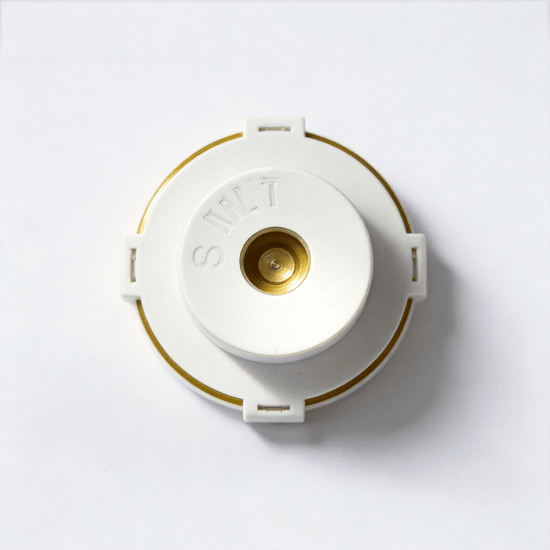
Swt 9.0*5.5mm Electromagnetic Active Buzzer 5V 2700Hz for Electronic Toy Prompt Sound
US$0.162-0.176
1,000 Pieces(MOQ)
Satisfies 1 requirement
Reliable Passive Buzzer for HVAC Voice Warning Systems
US$0.07-0.08
1,000 Pieces(MOQ)

Satisfies 1 requirement
Rapid High-Speed Industrial Warning Siren Jdw350 High Volume Electrical Alarm
US$312.00-350.00
1 Piece(MOQ)
Sourcing guidance for Different Types Of Buzzers
What are the primary technical differences between Active and Passive buzzers that buyers should consider?
The main difference lies in the internal drive circuit. Active buzzers have a built-in oscillating source, meaning they will sound as soon as they are energized with DC voltage. They are easier to integrate but have a fixed frequency. In contrast, Passive buzzers do not have an internal source and require a PWM (Pulse Width Modulation) signal to drive them. The advantage of passive types is that the sound frequency is controllable, allowing for different musical notes or tones, though they require more complex circuit design.
How should I choose between Piezoelectric and Magnetic buzzers for specific applications?
Selection depends on your operating voltage and sound pressure requirements. Piezoelectric buzzers operate on the piezoelectric effect, typically requiring higher voltages (3V-220V) but consuming very low current. They are ideal for high-frequency sounds and thin-profile devices. Magnetic buzzers (Electromagnetic) operate at lower voltages (1.5V-12V) but consume higher current. They are better suited for applications requiring lower frequencies and richer sound quality in a compact footprint.
What key specifications must be verified to ensure product reliability in industrial environments?
For industrial use, you must verify the Sound Pressure Level (SPL), usually measured at 10cm, ensuring it meets your decibel requirements (e.g., 85dB or higher). Additionally, check the Operating Temperature range (standard is -20°C to +70°C, but industrial grade should reach +85°C). For outdoor or harsh environments, ensure the buzzer has an IP rating (e.g., IP67) to protect against dust and moisture ingress.
What compliance standards are mandatory for exporting buzzers to global markets?
As electronic components, buzzers must comply with RoHS (Restriction of Hazardous Substances) to ensure they are lead-free. For the European market, CE marking is often required if the buzzer is part of a finished electronic assembly. For the North American market, UL certification for the plastic housing's flammability (e.g., UL94V-0) is a critical safety requirement for fire prevention.
Cross-Border Procurement Risks and Strategies for Acoustic Components
How can I mitigate the risk of receiving defective acoustic components in bulk orders?
Acoustic components can suffer from 'silent failure' or frequency shifts. You should mandate a Pre-Shipment Inspection (PSI) where a third party tests a random sample for SPL consistency and frequency response. Always request a Full Inspection Report from the supplier before final payment. Using Made-in-China.com's Secured Trading services can provide an extra layer of payment protection until the quality is verified.
What are the best practices for negotiating pricing and MOQs with buzzer manufacturers?
Buzzer production is highly automated, so unit prices drop significantly with volume. For standard models, aim for a 15-20% discount when moving from 1,000 units to 10,000 units. If you require custom lead wires or connectors, expect a higher MOQ (typically 3,000+ pieces). Negotiate for free golden samples before mass production to lock in the acoustic performance standard.
What shipping precautions should be taken for magnetic buzzers?
Magnetic buzzers contain internal magnets that can interfere with aircraft navigation systems. When shipping by air, you must ensure the supplier uses Magnetic Shielding Packaging. Failure to do so may result in the shipment being rejected by customs or airlines. Ensure the supplier provides a Non-Dangerous Goods Declaration or a Magnetic Inspection Report to facilitate smooth international transit.
How do I ensure transaction security when dealing with new overseas suppliers?
Prioritize suppliers on Made-in-China.com that have the 'Audited Supplier' badge, which indicates their business license and production capabilities have been verified by independent agencies like SGS or Bureau Veritas. Always use Escrow-based payment terms or Letters of Credit (L/C) for large-scale industrial orders to ensure funds are only released upon proof of shipment.