
Satisfies 1 requirement
Expandable Folding Box Container House for Versatile Living Spaces
US$799.00-1,200.00
1 Piece(MOQ)

I have found results from200000+products and70000+suppliers aboutHouse container


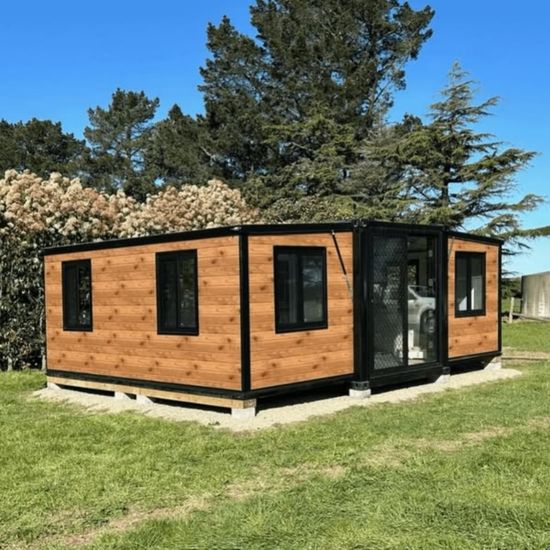


When evaluating a house container, the structural integrity and material quality are paramount. You must prioritize galvanized steel frames with a thickness of at least 2.5mm to 3.0mm to prevent corrosion and ensure load-bearing safety. For insulation, Rockwool or Polyurethane (PU) sandwich panels are superior to EPS due to their higher fire-resistance ratings (Class A) and better thermal retention. Additionally, ensure the floor system uses fiber cement boards rather than simple plywood for enhanced moisture resistance and durability.
B2B buyers must verify that the supplier adheres to ISO 9001 for quality management and ISO 14001 for environmental standards. For specific markets, look for CE marking (Europe) or AS/NZS standards (Australia/New Zealand). It is critical to request fire test reports for the wall panels and structural calculation books to ensure the unit can withstand local wind loads (up to 120km/h) and snow loads specific to your destination country.
House containers are highly versatile, ranging from temporary site offices and worker dormitories to luxury modular villas and disaster relief housing. Professional suppliers on Made-in-China.com offer extensive customization, including modular stacking (up to 3 floors), integrated electrical and plumbing systems (pre-installed to meet local codes), and aesthetic upgrades like glass curtain walls or wood-plastic composite (WPC) cladding.
Beyond the initial unit price, calculate the Total Cost of Ownership (TCO) by including ocean freight, local crane rental for installation, and foundation preparation. Flat-pack designs are more cost-effective for shipping, as 4 to 6 units can typically fit into a single 40HQ shipping container, reducing logistics costs by up to 75% compared to pre-assembled units.
The biggest risks include rusting during sea transit and mismatched electrical standards. To mitigate this, insist on marine-grade protective coatings and specify your country's voltage (e.g., 110V vs 220V) and plug types in the contract. Always use Trade Resources or third-party inspections before the final balance payment to verify the welding quality and waterproof sealing.
Focus on tiered pricing and lead time guarantees. For orders exceeding 10 units, aim for a 10-15% discount. Negotiate for spare parts (extra sealants, bolts, and touch-up paint) to be included at no cost. It is also wise to negotiate a retention fund (5-10%) payable only after the first unit is successfully assembled and inspected at the destination.
For bulk orders, use SOC (Shipper Owned Container) strategies if the units are permanent. Ensure the supplier provides a detailed installation video and manual in English. For complex projects, negotiate for the supplier to provide remote video technical support or, for very large volumes, the dispatch of a technical supervisor to oversee the local labor team.
Conduct all transactions through secure payment channels provided by reputable platforms like Made-in-China.com. Prioritize Audited Suppliers who have undergone on-site verification by independent agencies like SGS or Intertek. This ensures the factory actually possesses the production capacity and machinery they claim to have.