
Satisfies 1 requirement
Microbiology Incubation Cell Culture Tissue Engineering Laboratory Thermostat CO2 Incubator
US$2,580.00-2,928.00
1 Piece(MOQ)

I have found results from5000+products and2000+suppliers aboutLaboratory co2 incubator


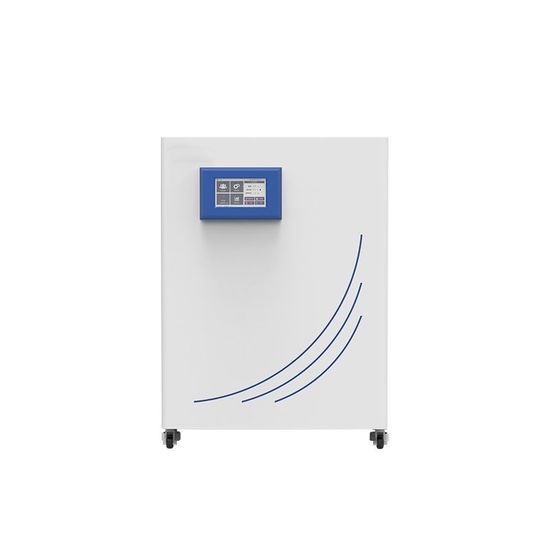


Buyers must prioritize CO2 sensor technology, specifically Infrared (IR) sensors over Thermal Conductivity (TC) sensors for faster recovery and higher accuracy. Ensure the temperature uniformity is within ±0.3°C and CO2 control precision is ±0.1%. Additionally, check for High-Temperature Disinfection (HTD) cycles, typically at 140°C or 180°C, to ensure effective sterilization without removing sensors.
Look for units with coved (rounded) corners and a seamless inner chamber made of 304 or 316L stainless steel to prevent microbial buildup. High-end models should include HEPA filtration systems that achieve ISO Class 5 cleanroom air quality within the chamber. Verify if the water reservoir is designed to minimize the risk of 'rain-out' or condensation on the ceiling.
For the European market, CE marking and compliance with the Low Voltage Directive (LVD) and Electromagnetic Compatibility (EMC) are essential. For medical or clinical applications, look for ISO 13485 certification. In the US, UL listing or ETL certification ensures electrical safety. Always request Calibration Certificates traceable to national standards (like NIST) for temperature and CO2 levels.
Water-Jacketed incubators provide exceptional temperature stability during power outages due to the thermal mass of water, but they are heavier and require more maintenance. Air-Jacketed models offer faster recovery times after door openings and are easier to move and sterilize. For most modern labs, air-jacketed systems with six-sided heating are preferred for their flexibility and high-temperature decontamination capabilities.
Ensure the supplier uses Export-Standard Plywood Crating rather than simple cardboard boxes. Request the inclusion of ShockWatch and TiltWatch indicators on the packaging to monitor handling during transit. It is highly recommended to use CIF (Cost, Insurance, and Freight) terms to ensure the cargo is fully insured against physical damage during the long-haul voyage.
Focus on After-Sales Technical Support rather than just the unit price. Negotiate for a 2-year warranty and the inclusion of critical spare parts (such as door gaskets and CO2 sensors) in the initial shipment. Use Made-in-China.com's Secured Trading services to ensure payment is only released upon verification of shipping documents and quality compliance.
Prioritize Audited Suppliers who have undergone on-site inspections by third-party agencies like SGS, Bureau Veritas, or TÜV Rheinland. Review their Audit Reports specifically for their R&D capabilities and quality control flowcharts. Check if they have experience exporting to your specific region to ensure they understand local voltage requirements (e.g., 110V/60Hz vs 220V/50Hz) and plug types.
The PSI should include a 72-hour stability test where the incubator is run at 37°C and 5% CO2. Request a video of the leakage test for the CO2 gas lines and a grounding resistance test for electrical safety. Ensure all O&M Manuals (Operation and Maintenance) are provided in professional English and that the software interface is localized.