
Satisfies 1 requirement
Aluminum Stainless Steel Solar LED Garden Light Pole Lamp Post Lamp Pole Street Light Pole
US$130.00-140.00
1 Piece(MOQ)

I have found results from70000+products and30000+suppliers aboutSolar street light with pole


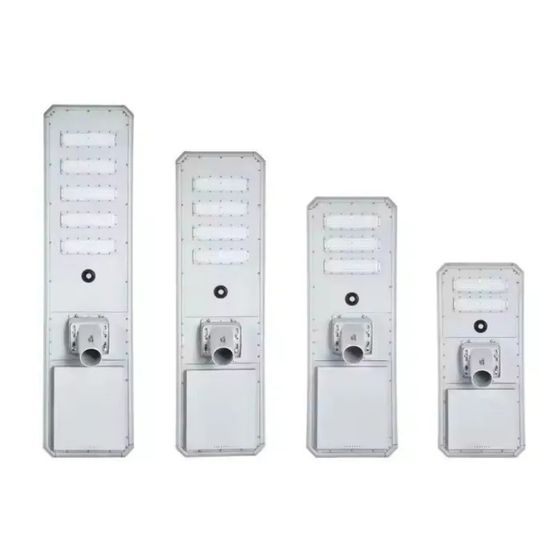


Selecting the correct brightness (lumens) and battery capacity is critical for operational reliability. Buyers should prioritize High-Lumen LED chips (e.g., Bridgelux or Philips) with an efficacy of at least 170lm/W. For battery technology, LiFePO4 (Lithium Iron Phosphate) is the industry standard due to its 2,000+ cycle life and superior thermal stability compared to ternary lithium. Ensure the battery capacity can support 3-5 rainy days (Autonomy Days) to prevent total blackout during inclement weather.
The pole must be engineered to withstand local environmental conditions. Specify Q235 or Q345 grade steel with Hot-Dip Galvanization (minimum 80μm thickness) to ensure a 20-year rust-free lifespan. For coastal areas, request extra powder coating for salt-spray resistance. The wind resistance rating should be certified for at least 140km/h, and the base plate thickness must be proportional to the pole height (typically 16mm to 20mm for 6-8 meter poles).
For maximum energy conversion, choose Monocrystalline Silicon solar panels, which offer efficiency rates of 21-23%, significantly higher than polycrystalline alternatives. The system must utilize an MPPT (Maximum Power Point Tracking) controller, which is 20-30% more efficient than PWM controllers, especially in low-light conditions. Ensure the controller has IP67 waterproofing and programmable dimming functions (e.g., motion sensing or time-control) to conserve energy.
To ensure safety and market access, verify that products carry CE, RoHS, and FCC certifications. For high-end projects, IEC 62257 (for rural electrification) and IP66/IP67 ingress protection ratings are essential. If sourcing for government tenders, request IES files (photometric data) to simulate lighting distribution and ensure compliance with local road lighting lux standards.
Battery fraud is a common risk in the solar industry. To prevent this, require a Grade A cell certificate and a third-party UN38.3 test report. You should also stipulate in the contract that the actual battery capacity will be tested upon arrival using a discharge meter; any variance exceeding 5% should trigger a pre-agreed penalty or replacement clause.
Poles are bulky and 'dead weight' in shipping. To optimize costs, use tapered poles that can be nested (inserted into one another) to reduce volume. For large orders, consider sourcing the LED heads and panels from China via Made-in-China.com and sourcing the heavy steel poles locally if the freight-to-value ratio is too high. If importing the full set, 40HC containers are preferred to accommodate the length of the poles.
Standard warranties are 2-3 years, but for B2B infrastructure, you should negotiate for a 5-year comprehensive warranty. Instead of returning faulty units (which is expensive), negotiate for 2% extra spare parts (controllers and LED modules) to be included in the initial shipment. Ensure the contract defines 'failure' clearly, including lumen depreciation (e.g., L70) and battery cycle degradation.
Always use Secure Payment services provided by Made-in-China.com to ensure funds are only released upon proof of shipment. Conduct a Pre-Shipment Inspection (PSI) through a third party like SGS or Intertek to verify the galvanization thickness and battery specs before the final balance is paid. This is the most effective way to prevent 'quality fade' between the sample and bulk production.