
Satisfies 1 requirement
Original Walkie-Talkie Radio Battery Desktop Charger for Motorola Gp3688 Cp140 Gp3188 Xir3688 Two Way Radios
US$6.80-9.80
2 Pieces(MOQ)

I have found results from20000+products and10000+suppliers aboutTwo way radio charger


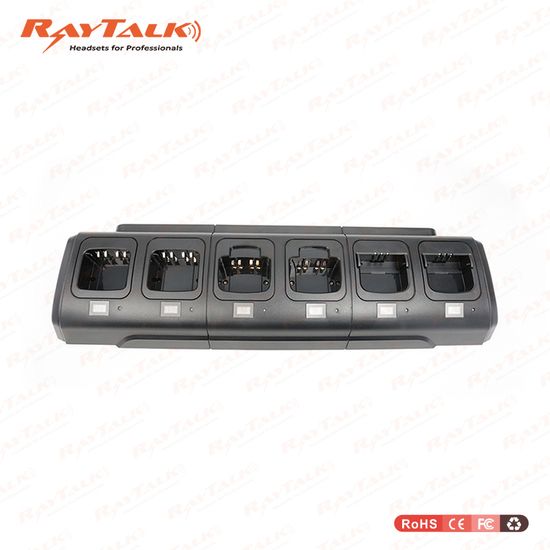


Buyers must prioritize voltage compatibility and current stability. Ensure the charger supports the specific battery chemistry of your fleet, such as Li-ion, Ni-MH, or Ni-Cd, as using the wrong charging profile can reduce battery lifespan or cause safety hazards. Look for intelligent charging technology that features automatic shut-off and overcharge protection to prevent thermal runaway. For enterprise use, multi-unit chargers (6-pocket or 12-pocket) are recommended to centralize power management and save space.
For the North American market, UL (Underwriters Laboratories) or ETL certification is essential for electrical safety. For the European Union, the CE mark and RoHS compliance (Restriction of Hazardous Substances) are mandatory. Additionally, ensure the power adapter meets Level VI energy efficiency standards. If the charger is intended for hazardous environments (e.g., oil and gas), it must be ATEX or IECEx certified to ensure it is intrinsically safe.
Request a sample for stress testing. Evaluate the insertion life cycle of the charging pins; high-quality chargers should withstand at least 5,000 to 10,000 insertions without contact failure. Check the heat dissipation design—chargers with internal heat sinks or ventilation slots perform better during continuous use. Verify the LED indicator logic, ensuring it clearly distinguishes between 'charging,' 'fully charged,' and 'battery fault' states.
Universal chargers with interchangeable pods offer significantly higher economic feasibility and scalability. They allow you to charge different radio models (e.g., Motorola, Kenwood, Hytera) on the same base by simply swapping the plastic cup. This reduces long-term procurement costs and simplifies inventory management for organizations using a mixed fleet of communication devices.
The primary risk is substandard internal components, such as low-quality capacitors that lead to high failure rates. To mitigate this, use Made-in-China.com's 'Audited Supplier' reports to verify the manufacturer's factory capacity and quality control systems. Another risk is plug type mismatch; always specify the destination country's plug standard (e.g., Type A for USA, Type G for UK) in the purchase agreement to avoid unusable stock.
Negotiate based on Total Cost of Ownership (TCO) rather than just the unit price. Ask for tiered pricing (e.g., discounts at 500, 1,000, and 5,000 units) and request a 1-2% spare parts allowance (extra charging cables or pods) to be included at no cost. For payment security, utilize Escrow services or Trade Assurance to ensure funds are only released after the goods pass a pre-shipment inspection (PSI).
Since chargers often include power adapters, they may be subject to specific customs HS codes for electrical machinery. Ensure the supplier provides a Commercial Invoice, Packing List, and Certificate of Origin. If the charger is bundled with batteries, it must comply with IATA/IMDG regulations for dangerous goods (UN38.3). For shipping to the US or Europe, consider DDP (Delivered Duty Paid) terms if you want the supplier to handle all import duties and local delivery.