
Satisfies 1 requirement
Factory Price 40kVA Single / Three Phase Variable Transformer
US$330.00-880.00
1 Piece(MOQ)

I have found results from30000+products and10000+suppliers aboutVariable transformer


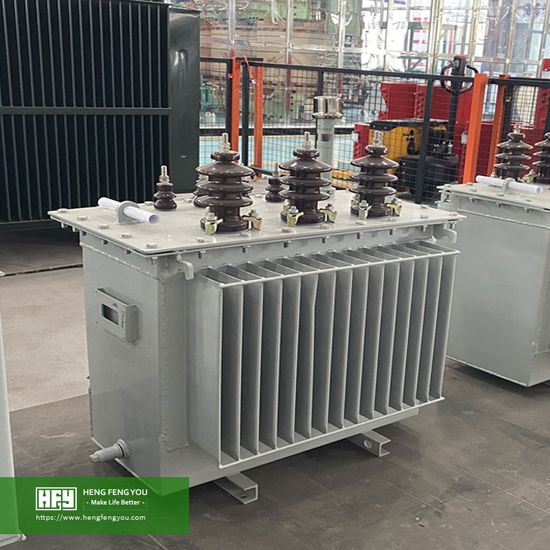


When sourcing a variable transformer, the most critical factor is the Power Rating (kVA) and Current Capacity (Amps). You must ensure the unit can handle at least 125% of the maximum expected load to prevent overheating. Additionally, verify the Input/Output Voltage Range (e.g., 0-250V or 0-480V) and the Phase Requirement (Single-phase vs. Three-phase). For industrial applications, prioritize units with high-purity copper windings and high-grade silicon steel cores to minimize core loss and improve efficiency.
To ensure safety and legal entry into various markets, the product must meet specific standards. For the US market, UL 1012 or UL 1561 certification is standard. For the European Union, CE marking and compliance with the Low Voltage Directive (LVD) 2014/35/EU and RoHS (Restriction of Hazardous Substances) are mandatory. If you are sourcing from China via Made-in-China.com, look for suppliers with ISO 9001 quality management systems and CCC (China Compulsory Certificate) for basic safety assurance.
The carbon brush is the most common point of failure. Ensure the supplier uses self-lubricating, high-density carbon brushes that provide a smooth contact surface. The commutator (track) should be gold-plated or nickel-plated in high-end models to prevent oxidation and arcing. Ask the supplier for the mechanical life rating, which should ideally exceed 10,000 cycles of rotation without significant voltage drop or physical wear.
Variable transformers are essential for Product Testing Labs to simulate voltage fluctuations, Industrial Heating Control to adjust furnace temperatures, and Voltage Regulation for sensitive medical or laboratory equipment. They are also widely used in Radio/Transmitter maintenance and Line Voltage Correction in regions with unstable power grids. Identifying the specific use case helps determine if you need an Open Frame (for integration) or an Enclosed (benchtop) model.
Variable transformers are heavy and contain fragile components like carbon brushes and copper coils. You should mandate Export-Standard Plywood Crating rather than simple cardboard boxes. Request Shockwatch or Tilt-Sensor stickers on the packaging to monitor rough handling. For high-value bulk orders, it is highly recommended to use Third-Party Inspection services (like SGS or Intertek) before the final balance payment is made on Made-in-China.com.
Focus on the Copper vs. Aluminum debate; copper is more expensive but offers better conductivity and longevity. If a price seems too low, the supplier may be using aluminum windings. Negotiate based on Total Cost of Ownership (TCO), including spare parts like extra carbon brushes and fuses in the initial contract. For long-term partnerships, request a 2-year warranty instead of the standard 1-year to ensure the supplier stands behind their build quality.
Always conduct transactions through secured payment channels provided by reputable platforms like Made-in-China.com. Avoid direct wire transfers to private bank accounts. Utilize Trade Terms like FOB (Free On Board) to maintain control over the shipping costs and insurance. Ensure all technical specifications, including weight, dimensions, and efficiency ratings, are clearly documented in the Proforma Invoice (PI) to serve as legal evidence in case of a dispute.
Due to the high weight-to-volume ratio, Sea Freight (LCL or FCL) is the most economical method. Ensure the supplier provides the correct HS Code (typically 850431) to avoid customs delays. Verify if your country imposes Anti-Dumping duties on electrical components from the origin country. Work with a freight forwarder experienced in heavy machinery to handle the 'last mile' delivery, as a lift-gate truck may be required at the destination.