
Satisfies 1 requirement
Ei Transformer Ensures Consistent Power for Industrial Welding Machine Systems
US$6.88
80 Pieces(MOQ)

I have found results from50000+products and20000+suppliers aboutWelding machine transformer


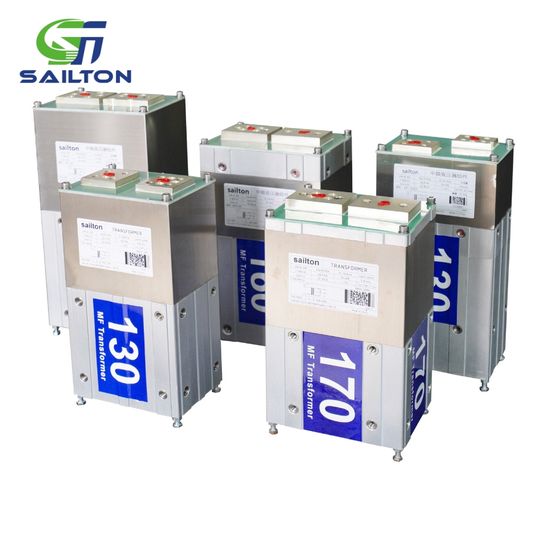


Selecting a high-performance transformer requires evaluating duty cycle, insulation class, and core material. For industrial use, prioritize transformers with a 100% duty cycle to ensure continuous operation without overheating. Ensure the unit uses Class H or Class R insulation (capable of withstanding 180°C-220°C) to prevent premature coil failure. Additionally, look for pure copper windings rather than aluminum, as copper offers superior electrical conductivity and thermal stability, significantly extending the machine's lifespan.
The Open Circuit Voltage (OCV) and Reactance Control are vital. A stable OCV (typically between 60V and 90V) ensures easy arc striking. For transformers used in MIG or TIG welding, verify the magnetic flux leakage characteristics, which help maintain a constant current despite fluctuations in arc length. You should also confirm the input voltage compatibility (e.g., 220V/380V/440V) to match your local industrial power grid and prevent phase imbalance.
To ensure safety and market access, the product must adhere to IEC 60974-1 (the international standard for arc welding equipment). For the North American market, UL 60974-1 or CSA certification is mandatory, while the CE mark is required for Europe. Additionally, check for IP21 or IP23 ingress protection ratings to ensure the transformer is protected against solid objects and dripping water in workshop environments.
Efficient thermal management is key to preventing downtime. Opt for units equipped with forced-air cooling systems (high-speed fans) and integrated thermal overload protection that automatically shuts down the circuit if temperatures exceed safe limits. Examine the heatsink design and the internal airflow path; high-quality manufacturers on Made-in-China.com often provide internal photos showing anodized aluminum heatsinks and organized wiring to facilitate heat dissipation.
The main risks include physical damage during transit and voltage mismatch. Because transformers contain heavy iron cores, they are susceptible to impact damage. Insist on seaworthy packaging, specifically fumigated wooden crates with internal shock-absorbing foam. Always double-check the rated frequency (50Hz vs 60Hz), as running a 50Hz transformer on a 60Hz line can cause overheating and efficiency loss.
Focus your negotiation on component transparency and warranty terms. Ask for a Bill of Materials (BOM) specifying the brand of silicon steel sheets and the purity of the copper used. Negotiate for a minimum 2-year warranty on the core assembly and request 1-2% wear-and-tear spare parts (such as cooling fans or terminals) to be included in the bulk order at no extra cost.
Utilize secured payment terms and conduct pre-shipment inspections (PSI). For heavy machinery, it is highly recommended to hire a third-party inspector to perform a load test and a dielectric strength test (Hi-pot test) before the balance payment is made. When sourcing via Made-in-China.com, prioritize Audited Suppliers who have undergone on-site verification of their manufacturing capabilities.
Due to the high weight-to-volume ratio, Sea Freight (LCL or FCL) is the most economical method. For large-scale projects, FOB (Free On Board) is preferred as it allows the buyer to control the logistics costs and choose a carrier experienced in handling heavy industrial goods. Ensure the Harmonized System (HS) Code 850432 is used for correct customs declaration and to check for any applicable anti-dumping duties in your region.