
Satisfies 1 requirement
Durable Metal Frame Glass Backyard Vegetable Growing Greenhouse
US$20.20-29.80
500 Square Meters(MOQ)

I have found results from9000+products and3000+suppliers aboutWholesale backyard greenhouse


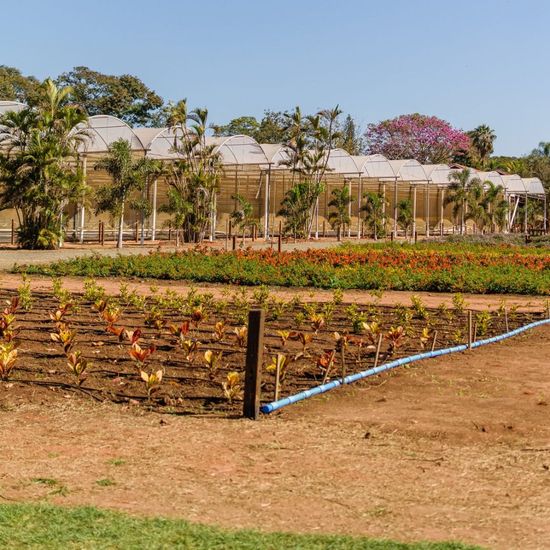


When sourcing greenhouses, prioritize hot-dip galvanized steel frames or anodized aluminum alloys to ensure rust resistance. For covering materials, 4mm to 10mm twin-wall polycarbonate panels are the industry standard for B2B procurement due to their high impact resistance and UV protection (typically 50+ microns). If sourcing glass greenhouses, ensure the use of tempered safety glass to meet international building codes.
A professional-grade greenhouse must include integrated gutter systems for water drainage and automatic roof vents triggered by heat-sensitive wax cylinders. For high-end markets, look for suppliers offering built-in shading systems and forced-air ventilation fans. Ensure the structure is rated for specific wind loads (e.g., 100-120 km/h) and snow loads (e.g., 50-75 kg/m²) to guarantee structural integrity in diverse climates.
Buyers should request ISO 9001 certification for manufacturing consistency. For the European market, CE marking is essential, while North American buyers should verify that polycarbonate panels meet ASTM D635 for flammability and ASTM D1003 for light transmission. Additionally, ensure the supplier provides a structural calculation report to facilitate local building permit approvals for your end customers.
Calculate the Total Cost of Ownership (TCO) by including the unit price, sea freight, and import duties (HS Code 940690). Seek suppliers on Made-in-China.com who offer modular designs, allowing you to scale inventory by stocking standard extension kits. Bulk discounts typically trigger at 20ft or 40ft container volumes, which can reduce the per-unit cost by 20-35% compared to LCL (Less than Container Load) shipments.
The biggest risks are panel breakage and missing hardware. To mitigate this, insist on honeycomb cardboard packaging or wooden crates for polycarbonate/glass. Require the supplier to provide a detailed packing list where every screw and bracket is numbered, and ensure they include 3-5% extra hardware as 'spare parts' to avoid costly delays during assembly.
Do not negotiate on price alone; negotiate on material thickness and weight. A common tactic is reducing aluminum wall thickness to lower costs. Specify a minimum wall thickness (e.g., 1.2mm to 2.0mm) in the contract. Use Trade Resources on Made-in-China.com to verify the supplier's Audit Reports and past export performance before finalizing payment terms.
Utilize Secured Payment services or Letters of Credit (L/C) for large volumes. Never wire full payments upfront; a standard 30% deposit and 70% balance against the Bill of Lading (B/L) is preferred. Conduct a Pre-Shipment Inspection (PSI) via a third-party agency to verify that the frame dimensions and panel quality match the approved sample.
Due to the bulky nature of greenhouse frames, Sea Freight (FCL) is the only economically viable method. For 'Backyard' models, ensure the packaging is 'Mail Order Drop-Ship' compatible if you plan to sell online, as this reduces secondary domestic shipping costs. Coordinate with a freight forwarder experienced in Oversized Cargo to handle customs clearance and 'last-mile' delivery to your warehouse.