
Satisfies 1 requirement
Wake Refreshing Black Mint Liquid Pop Filled Candy
US$0.45-0.80
2,000 Pieces(MOQ)

I have found results from10000+products and4000+suppliers aboutPop candy


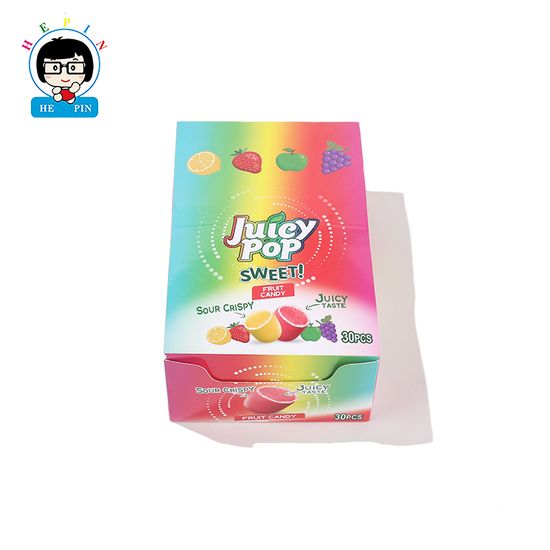


Buyers must focus on the CO2 encapsulation technology which creates the 'popping' sensation. Ensure the ingredient list primarily consists of sugar, lactose, corn syrup, and carbon dioxide. For sugar-free markets, verify the use of polyols like isomalt. It is critical to confirm the moisture content is below 1%, as high humidity will cause the candy to lose its effervescence and clump together.
Suppliers must hold HACCP or ISO 22000 certifications to ensure food safety management. For the US market, FDA registration and compliance with the FSMA (Food Safety Modernization Act) are mandatory. For the EU, ensure all food colorings (E-numbers) are approved and that the product meets REACH and EFSA standards. Always request a Certificate of Analysis (COA) for every batch to check for heavy metals and microbial limits.
Request samples to test the intensity and duration of the popping sensation. Quality pop candy should remain active for at least 12 to 24 months if stored correctly. Check the packaging integrity; high-quality suppliers use aluminum foil composite films with high moisture barrier properties to prevent the candy from reacting with ambient air.
Most professional manufacturers on Made-in-China.com offer customization in flavor profiles (e.g., cola, strawberry, popping chocolate), particle size (fine powder vs. large granules), and packaging formats (sachets, tubes, or bulk 10kg cartons for industrial use). Ensure the supplier can provide private labeling with compliant nutritional facts panels in your target language.
Pop candy is highly sensitive to temperature and humidity. During cross-border transit, ensure the use of reefer containers (refrigerated) or moisture-proof pallets if shipping through tropical zones. Temperatures exceeding 35°C (95°F) can cause the sugar matrix to soften, releasing the trapped gas and 'killing' the pop effect before it reaches the consumer.
Utilize the Secured Trading Service on Made-in-China.com to protect your payments. Before placing a bulk order, conduct a factory audit (either in-person or via a third-party like SGS/Intertek) to verify the supplier's cleanroom production environment, as confectionery is prone to contamination. Avoid suppliers who cannot provide a valid Business License and Food Export Permit.
Negotiate based on volume-based pricing tiers; typically, ordering in Full Container Loads (FCL) can reduce unit costs by 15-25% compared to LCL due to lower logistics overhead. Discuss packaging waste allowances and request a 2% buffer of extra packaging materials to account for potential damage during local distribution.
Be aware of sugar quotas and anti-dumping duties that some countries impose on imported confectionery. Check your local Harmonized System (HS) Code (typically Chapter 1704) to calculate accurate import duties. Ensure the supplier provides a Generalized System of Preferences (GSP) Certificate of Origin if applicable, to benefit from reduced tariff rates.