
Satisfies 1 requirement
All-in-One Wind Solar Hybrid LED Street Lighting with Fan Turbine 40W for Smart City Project
US$200.00-500.00
1 Set(MOQ)

I have found results from10000+products and3000+suppliers aboutSolar and wind hybrid lighting


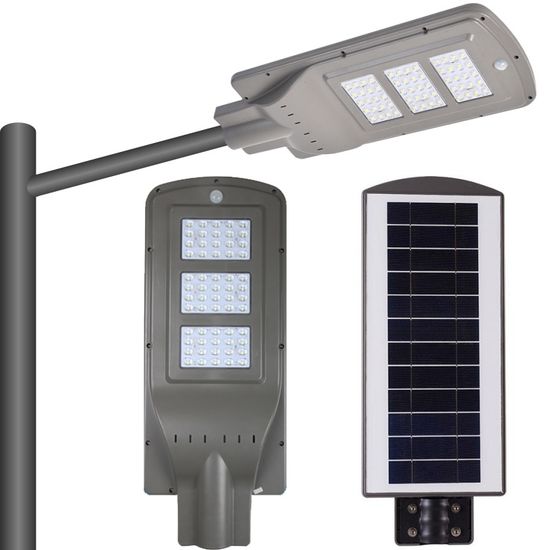


Buyers must focus on the synergy between the wind turbine and solar panels. Ensure the Vertical Axis Wind Turbine (VAWT) or Horizontal Axis Wind Turbine (HAWT) has a low start-up wind speed (typically <2.5m/s) to ensure power generation in light breezes. For solar components, prioritize Monocrystalline Silicon panels due to their higher conversion efficiency (up to 22%). The MPPT (Maximum Power Point Tracking) Controller is the most critical component, as it must effectively manage dual inputs to prevent battery overcharging and optimize energy harvest from both sources simultaneously.
For modern B2B procurement, LiFePO4 (Lithium Iron Phosphate) batteries are the industry standard, offering over 2,000-3,000 charge cycles and superior thermal stability compared to traditional Lead-Acid or Gel batteries. Ensure the battery capacity provides at least 3-5 days of autonomy (rainy day backup) to maintain lighting reliability during periods of zero sun or wind. Verify that the battery housing is IP67 rated for underground or pole-mounted protection against moisture.
To ensure safety and market entry, products must carry CE and RoHS certifications for the European market, or UL/ETL listings for North America. Since these systems involve wind turbines, look for IEC 61400-2 (safety of small wind turbines) and IEC 61215 for terrestrial photovoltaic modules. For coastal installations, confirm the equipment has passed Salt Spray Testing (ISO 9227) to prevent corrosion of the aluminum alloy poles and turbine blades.
The pole must be engineered to withstand the combined mechanical stress of the wind turbine's vibration and high-velocity wind loads. Request Wind Resistance Calculations (typically rated for 120-160km/h) and ensure the pole is made of Q235 or Q345 hot-dip galvanized steel with a coating thickness of at least 80μm to prevent rust for 15-20 years.
Hybrid systems contain fragile solar glass and precision turbine bearings. Insist on reinforced wooden crate packaging for turbines and palletized shipping for solar panels. Use Made-in-China.com's Secured Trading services to ensure that payment is only released after a Pre-shipment Inspection (PSI) confirms the goods are packed according to the agreed specifications and are free of structural defects.
Focus on the Total Cost of Ownership (TCO) rather than just the unit price. Negotiate for extended warranties (5 years for PV, 3 years for turbines) and ask for 2% spare parts (such as LED drivers and sensors) to be included in the bulk order. For large-scale municipal projects, request customized IES files for lighting simulation to prove the system meets local lux requirements before finalizing the contract.
These systems are often classified as oversized cargo due to the 6-12 meter poles. To reduce costs, consider sourcing poles locally while importing the high-tech heads (turbine, panel, light, controller) from China. If importing the full set, use 40ft HQ containers to maximize space and choose FOB (Free On Board) terms to maintain control over the shipping line and avoid inflated destination charges.
Always verify if the supplier is an Audited Supplier on Made-in-China.com, which indicates their business license and production capabilities have been verified by third-party agencies like SGS or Bureau Veritas. Conduct all communications and payments through the platform's official channels to benefit from buyer protection programs and dispute resolution services.