
Satisfies 1 requirement
Vav Convenient Intelligent Accuracy Single-Stage Intermittent Control Variable Air Volume Box System
US$200.00-300.00
1 Piece(MOQ)

3000+ products and 1000+ suppliers results


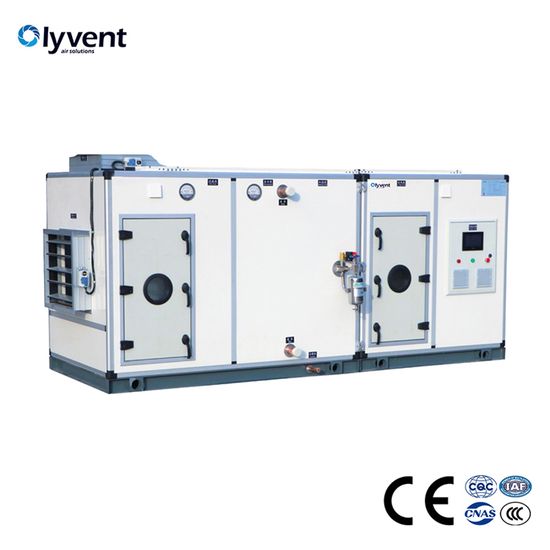


When evaluating VAV units, prioritize casing leakage rates (should meet ASHRAE 130 standards) and airflow sensor accuracy, typically requiring a ±5% precision range. Ensure the unit uses high-density fiberglass or closed-cell foam insulation (minimum 1/2 inch) to prevent thermal loss and dampen noise. For the actuator, specify 24V brushless DC motors for longevity and precise damper positioning.
Buyers must verify AHRI 880 certification, which benchmarks the performance of air terminals. For electrical safety, UL 1995 or ETL listing is essential for the North American market, while CE marking is required for Europe. Additionally, ensure the unit's controller supports BACnet or Modbus protocols to guarantee seamless integration with existing Building Automation Systems (BAS).
Single Duct VAVs are the most cost-effective for cooling-only zones. Fan-Powered VAVs (Parallel or Series) are necessary for zones requiring supplemental heating or constant air circulation, such as perimeter offices. Dual Duct units are specialized for facilities needing simultaneous heating and cooling without mixing air, though they involve higher initial capital expenditure and ductwork complexity.
Look for a low pressure drop across the terminal (ideally <0.2 in. w.g. at nominal flow) to reduce central fan energy consumption. Request NC (Noise Criteria) ratings for both radiated and discharge sound; for office environments, an NC level of 30-35 is the industry standard. Ensure the damper blade seals are rated for low leakage (less than 1% of max flow) at 3" w.g. inlet pressure.
Implement a mandatory Pre-Shipment Inspection (PSI). Since VAV units contain sensitive electronics and calibrated sensors, request a functional test report for each unit's actuator and controller. Use Made-in-China.com's Secured Trading services to ensure payment is only released after the Bill of Lading is verified and the goods pass initial quality checks.
Focus on Total Cost of Ownership (TCO) rather than just the unit price. Negotiate for extended warranties (3-5 years) on the actuators and sensors, as these are the most common failure points. For large-scale projects, request tiered pricing where the unit cost drops by 10-15% for orders exceeding 100 units, and ask the supplier to include spare controller kits at a discounted rate.
VAV units are bulky and sensitive to moisture. Insist on seaworthy packaging including vacuum-sealed plastic wrapping and reinforced wooden crates to prevent corrosion of galvanized steel components. When shipping to the US or Europe, ensure the supplier provides a Certificate of Origin to take advantage of specific trade agreements and minimize customs duties.
Explicitly confirm the input voltage (e.g., 110V vs 220V) and frequency (50Hz vs 60Hz) before production. Request the BACnet PICS (Protocol Implementation Conformance Statement) document from the supplier to ensure their software can 'talk' to your local Building Management System (BMS) without requiring expensive third-party gateways.